
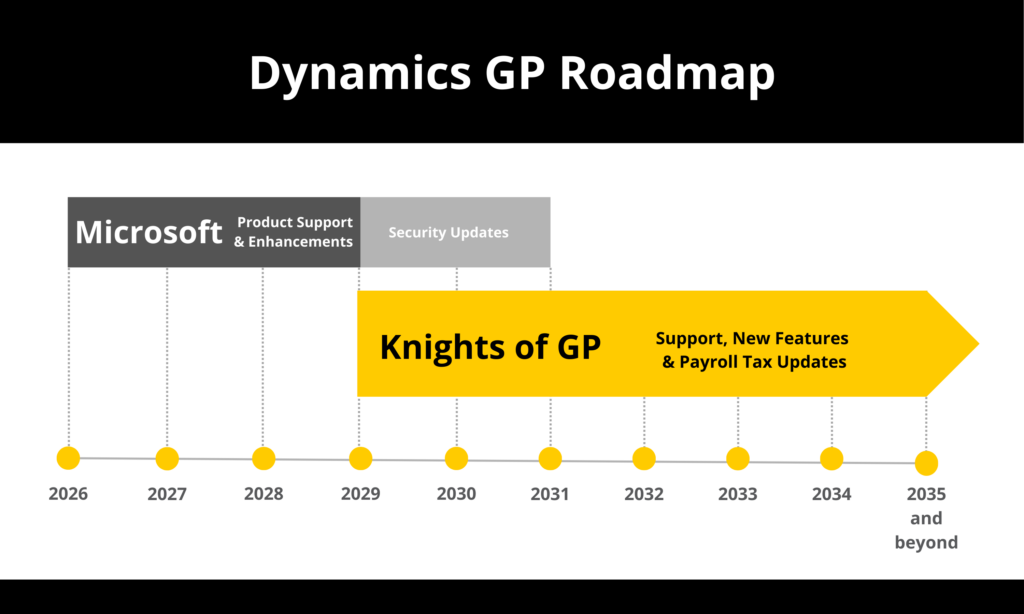
The 2031 date gets all the attention. But here is the conversation that actually determines your outcome: who is supporting your Dynamics GP environment right now, and what are they really committed to?
Not all GP partners are the same. Some have spent years building deep expertise on this platform and genuinely believe in its future. Others still have GP customers on their books while quietly moving their best people into Business Central practices. The difference between those two types of partners is not a small one—and the GP community has paid real tuition learning that lesson.
The Warning Story Every GP Customer Needs to Hear
NewStar Sourcing had been running Dynamics GP for years. It worked. Their team knew it. Their operations depended on it. Then the pressure started. Microsoft’s messaging, aggressive competitors, and a partner nudging them toward Business Central all landed on the same message: move, or be left behind.
So NewStar moved.
What followed was what their President, Tony Colanino, called “seven weeks of hell.” Their training sessions were chaotic. Critical inventory, lot tracking, and fulfillment workflows didn’t work. The ISV they had relied on for years—Cavallo SalesPad Desktop—had no comparable replacement in Business Central. Tasks that used to take three clicks now took fifteen. The go-live was a disaster.
Tony went to his board, took full responsibility, and made the call: they were going back to GP.
“That old GP pickup truck just starts every time you turn the key.” — Tony Colanino, President, NewStar Sourcing
NewStar’s story is not unusual. It is a warning that deserves to travel far and wide in this community. The wrong partner—one whose real priority was getting them off GP—cost them six figures and a year of their team’s energy. The right partner gave them back their business.
What “Committed to GP” Actually Looks Like
A lot of partners still have GP customers. Far fewer are actually committed to GP. Here is the distinction that matters.
A genuinely GP-committed partner has consultants who live and breathe Dynamics GP, with deep expertise who were often GP end users before they ever became consultants. They are not splitting attention between GP and a growing Business Central practice. They are not building out a migration team on the side. They invest in GP content, GP development and in the Dynamics GP community. When you call with a support issue, you get a GP expert, not someone who is half in and half out.
When a feature gap comes up, a committed GP partner tells you honestly whether GP can handle it, points you to the right ISV, or finds another path. They will never tell you GP can’t do something just to make a migration look necessary.
And when you ask about your future on this platform, the answer is never “you need to move.” It is “here is how we help you thrive.”
Red Flags Worth Paying Attention To
The GP ecosystem is shifting. Some partners have quietly reprioritized. Here are four signs that your current partner may no longer be your partner in the way that matters:
🚩 Every support call turns into a migration pitch. Cloud publishers like Microsoft have partner incentive programs that require partners to add new customers each year to maintain their margins. That creates real financial pressure on some partners to push migrations—even when those migrations are not right for the customer. If every conversation ends with a nudge toward Business Central, your partner has a different agenda than you do.
🚩 The GP team keeps shrinking. Slower response times. Consultants who seem unfamiliar with GP. Tickets that take days to get a real answer. These are signs that your partner has moved their best people somewhere else. It does not mean GP is struggling—it means that partner’s priorities have changed.
🚩 GP content has gone quiet. No more GP webinars. No new blog posts. Every event is about Business Central or the next shiny thing. When a partner stops investing in GP content and community, that tells you everything you need to know about where their focus has gone.
🚩 They tell you GP can’t do something it absolutely can. This one is serious. There are GP customers who were told by their partner that GP lacked a certain capability—only to discover it was there the whole time. Easily, in fact. In some cases, an ISV would have solved the problem in hours. Instead, those customers were pushed into six-figure ERP transitions they never needed. If someone is telling you GP can’t meet your needs, get a second opinion before you do anything else.
GP Has a 10+ Year Runway. The Right Partners Know It.
There is a lot of noise about 2031. Some partners have used Microsoft’s end of support date to manufacture urgency around migration. But the noise and the reality are two different things.
Dynamics GP will not stop working when Microsoft stops supporting it. Your system will keep running. Transactions will keep posting. Reports will keep generating. The software does not have an expiration date.
And here is a detail worth knowing: Terry Heley, who leads GP at Microsoft, committed at Summit that the last version of GP Microsoft releases—in 2028—will be compatible with Windows 2028 and SQL Server 2028. Both of those carry a 10-year support lifecycle. That means the infrastructure GP runs on will be supported well through 2038. The actual runway is far longer than the headlines suggest.
The ISVs and partners who are serious about this platform see it the same way. Companies like Cavallo, Winthrop Development Consultants, Rockton Software and a growing list of others have publicly committed to supporting their GP customers for 10+ years. The community is not disbanding. It is organizing.
The Knights of GP Preferred Partner and ISV Lists Exist for Exactly This Reason
Choosing a GP partner today should not require guesswork. You should not have to spend hours researching whether a company still cares about this platform or is just keeping you on the books while they build their Business Central revenue.
That is why the Preferred Partner and Preferred ISV designations exist on this site.
Every company that has earned Preferred status here has done more than make a verbal commitment. They have publicly stated their intention to support Dynamics GP for 10+ years.
When you are evaluating whether a partner is the right fit, start here. The Preferred Partner list gives you a starting point built on public accountability, not just sales copy.
No Pressure. But the Partner Choice Matters.
Dynamics GP is not going away. You do not need to make any decisions by tomorrow, or next month, or this year. But the partner supporting your environment matters today—and especially as we move through the years ahead.
If you are seeing the warning signs—if every call becomes a sales pitch, if response times have slipped, if someone told you GP can’t do something you suspect it can—it is worth having a conversation with someone who has a different answer.
The Knights of GP community exists to make sure that conversation is easy to find. And the partners and ISVs on this site are ready to have it.